VAT by product, from supplier to invoice
Track VAT by supplier and item, estimate the VAT position of a trip, and put a VAT breakdown on your customer invoices.
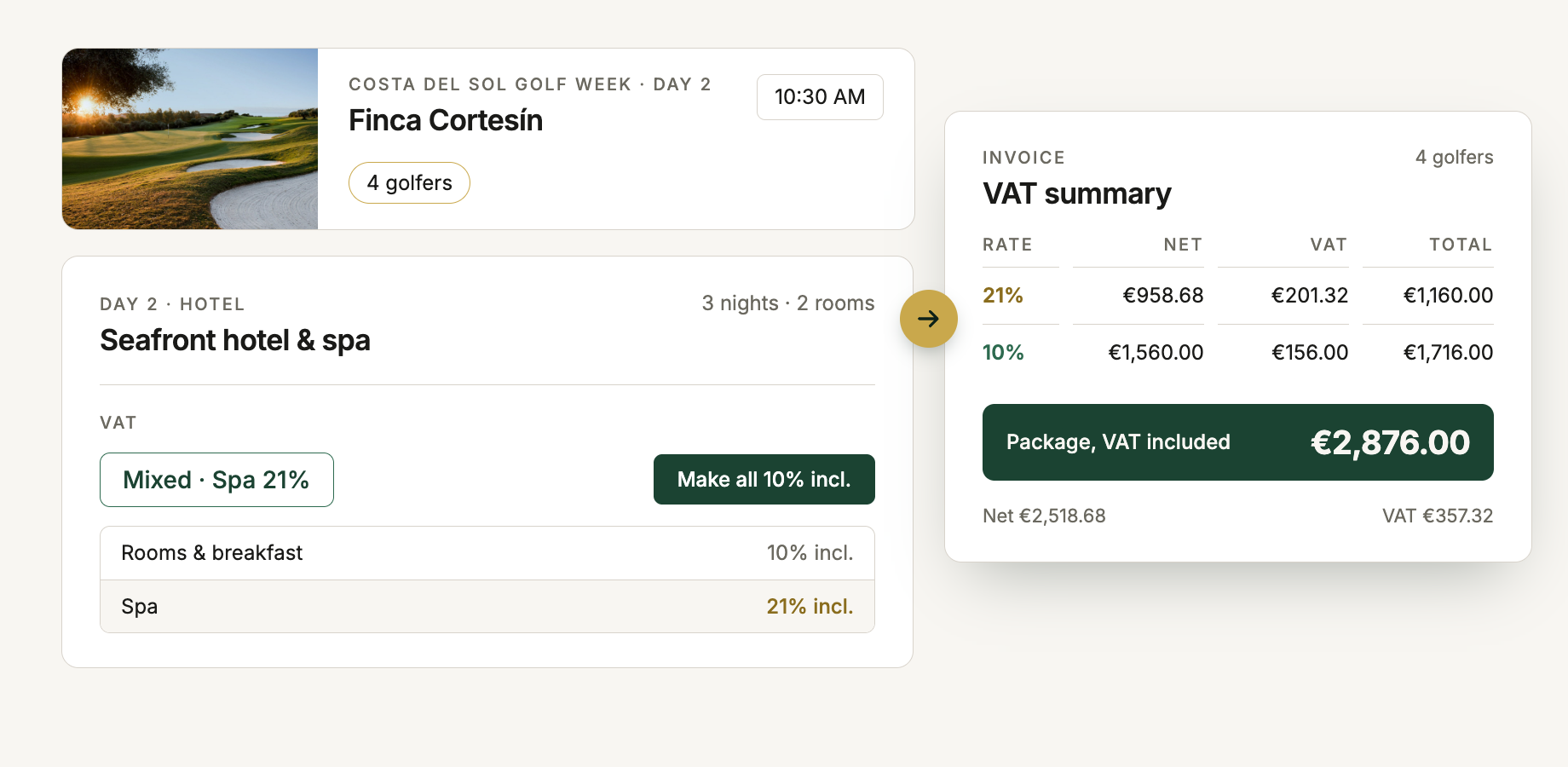
Golf trips rarely have one VAT rate
A golf trip can combine several VAT rates in one package. In Spain, a green fee is usually taxed at 21%, while the hotel, the transfers and the dinners may be at 10%. A spa treatment can sit at another rate, and some services are exempt.
Until now, an agency on standard VAT could price that trip in RoundPlan but could not see its tax treatment product by product.
RoundPlan now stores VAT with each supplier, and you can set it on a single rate when that rate differs. Each supplier starts from the default for its country. You can review or change those defaults in Settings → Taxes and VAT.
Inside a trip, VAT stays out of the way. Each supplier has one collapsed VAT section. When everything shares a rate, there is little to look at. When something differs, for example a hotel at one rate with its spa at another, RoundPlan says so and lets you line it up in one click.
See the VAT before you sell
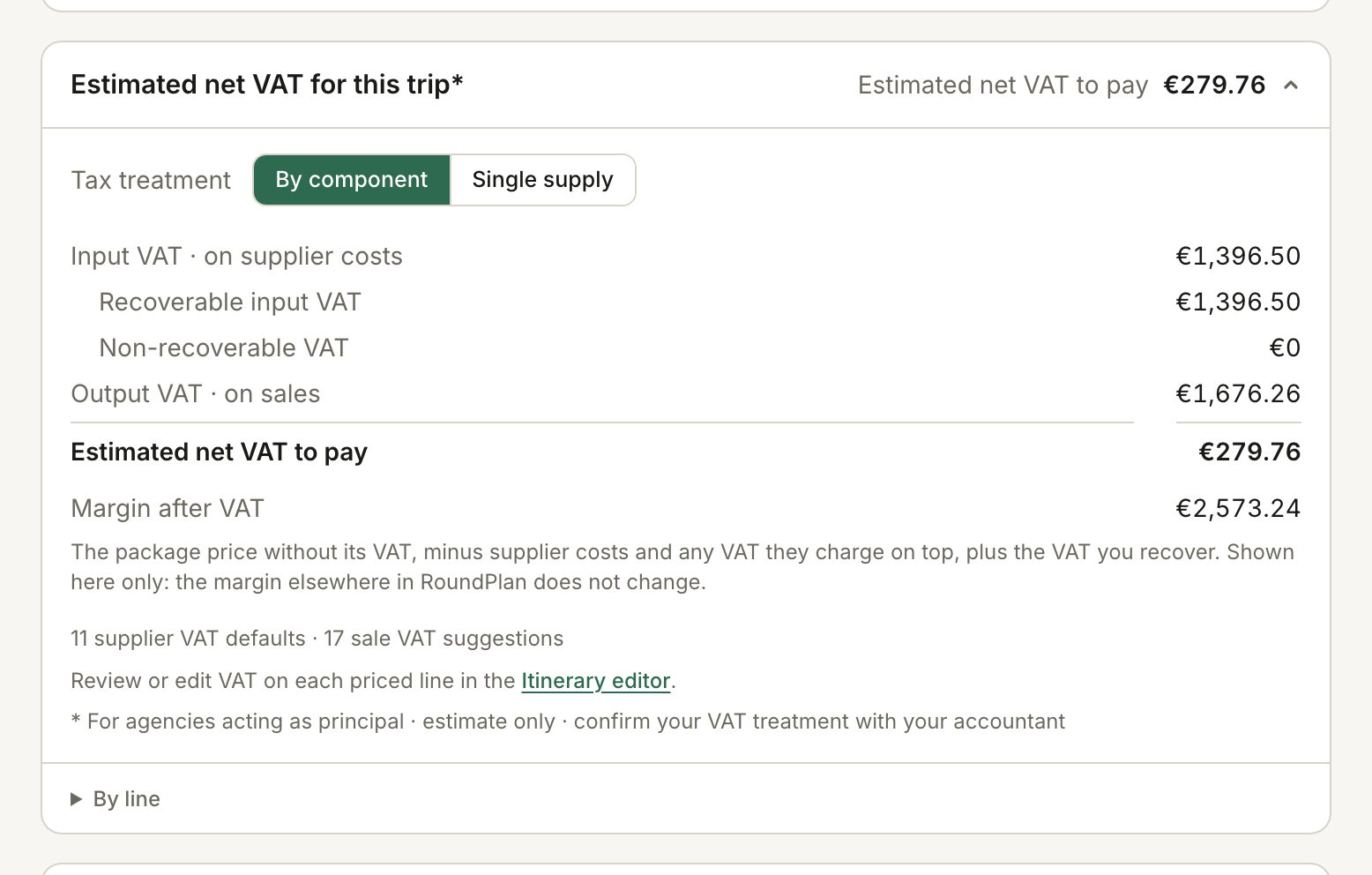
If your agency uses standard VAT, the trip Overview now has an internal VAT estimate: the VAT on your costs, how much you can recover, the VAT on the sale, the net amount to pay and your margin after VAT. Only your team sees it. The traveller never does.
It does not replace your accountant or decide your tax treatment. It shows you the VAT while you are still pricing the trip, instead of when the return is prepared.
VAT on the invoice
Customer invoices can now carry a VAT summary by rate, with the net amount, the tax and the total for each one. This works with deposits too: when you invoice the balance, the final invoice deducts what you already invoiced, rate by rate.
If you invoice in another currency, the summary can also appear in your reporting currency. You can name the tax VAT, GST or whatever your country uses, and show the detail line by line if you need it.
Trips with suppliers in other countries need one more decision. RoundPlan does not assume that a foreign supplier’s VAT applies to your sale. If you use standard VAT, it asks you to set the sale VAT for those lines before the invoice goes out, and you can do it once for all of them from the invoice form.
If you use the margin scheme (TOMS or REAGP), your invoices work as before: one price and the scheme’s wording, now with your client’s details.
Before you start, check your VAT scheme in Settings → Taxes and VAT. If you use standard VAT, look over the supplier VAT defaults for the countries you work with.